OpenAI’s GPT-5.6 release is not one model with one obvious default. It is a family of three tiers, multiple reasoning settings, and optional multi-agent execution. That gives developers more control, but it also makes poor configuration easier.
The useful question is not “Which GPT-5.6 model is best?” It is “Which configuration reaches the required success rate at the lowest total cost and acceptable latency?”
The three model tiers
OpenAI positions the family as follows:
| Tier | API price per 1M input tokens | API price per 1M output tokens | Best starting point |
|---|---|---|---|
| GPT-5.6 Sol | $5.00 | $30.00 | Difficult, high-value work where failure is expensive |
| GPT-5.6 Terra | $2.50 | $15.00 | Balanced agent and knowledge-work tasks |
| GPT-5.6 Luna | $1.00 | $6.00 | High-volume coding, extraction, classification, and routing |
These are list prices published by OpenAI. Prompt caching changes the economics: cache reads receive a discount, while cache writes are billed above the uncached input rate. Applications with large, stable instructions should therefore measure cache hit rate instead of estimating cost from raw prompt size alone.
Sol: reserve the flagship for expensive failures
Sol is the sensible starting point for work that is both difficult and valuable: complex repository migrations, long-horizon investigations, high-stakes financial analysis, difficult cyber defense, or synthesis across many tools and documents.
OpenAI reports state-of-the-art or near-frontier results across several coding and agent evaluations. Those results are useful signals, but they remain release-time benchmarks selected by the vendor. An internal evaluation should decide whether Sol’s higher token price produces fewer retries, less review, or a higher completion rate on your tasks.
Sol is a poor default when requests are simple, frequent, and easy to verify. Paying flagship prices for routine extraction is an architecture problem, not a quality strategy.
Terra: the middle tier needs a clear job
Terra is priced at half of Sol and is intended as a balanced model. It may fit mixed enterprise workflows where Luna misses too many edge cases but Sol does not improve outcomes enough to justify its cost.
The danger is choosing Terra because it feels moderate. Middle tiers should earn their place through evaluation. If Luna passes the same acceptance tests, use Luna. If a difficult task repeatedly needs escalation, route it to Sol. Terra is valuable when it occupies a measured band between those outcomes.
Luna: test high reasoning before moving up a tier
Luna is the most interesting default candidate for many developers. Its low token price makes it suitable for large queues, coding subtasks, document processing, tool selection, and first-pass generation.
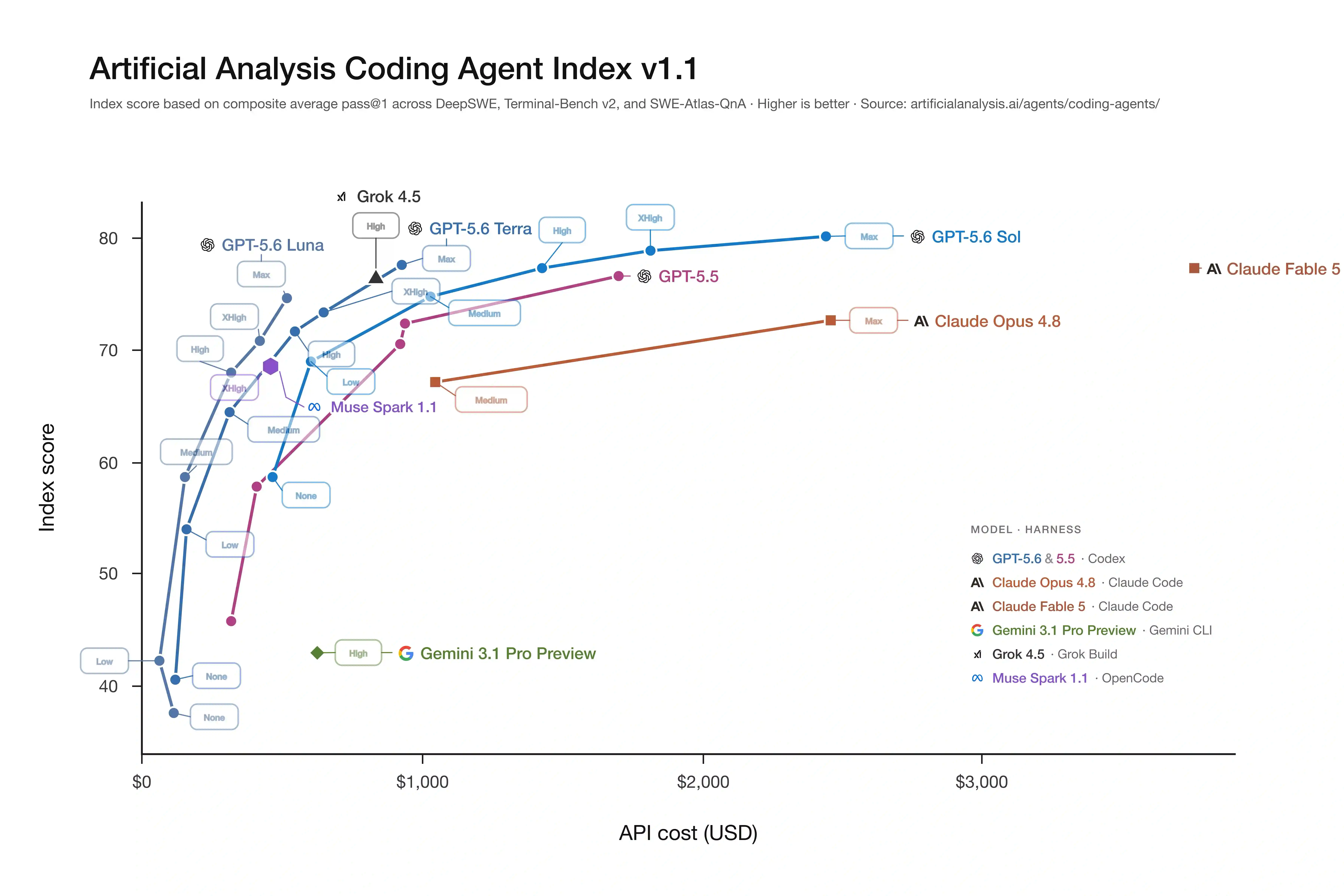
Independent configuration analysis suggests that Luna with a higher reasoning setting can compete with larger configurations on some coding-agent evaluations while remaining cheaper. The result is task-dependent, but the testing order is sound: increase reasoning effort on the smaller model before automatically upgrading every request to a larger model.
Reasoning settings change both quality and economics
GPT-5.6 introduces a broad effort range. Higher settings allow more exploration, verification, and revision. OpenAI describes max as a level beyond xhigh. The ultra setting goes further by coordinating multiple agents in parallel.
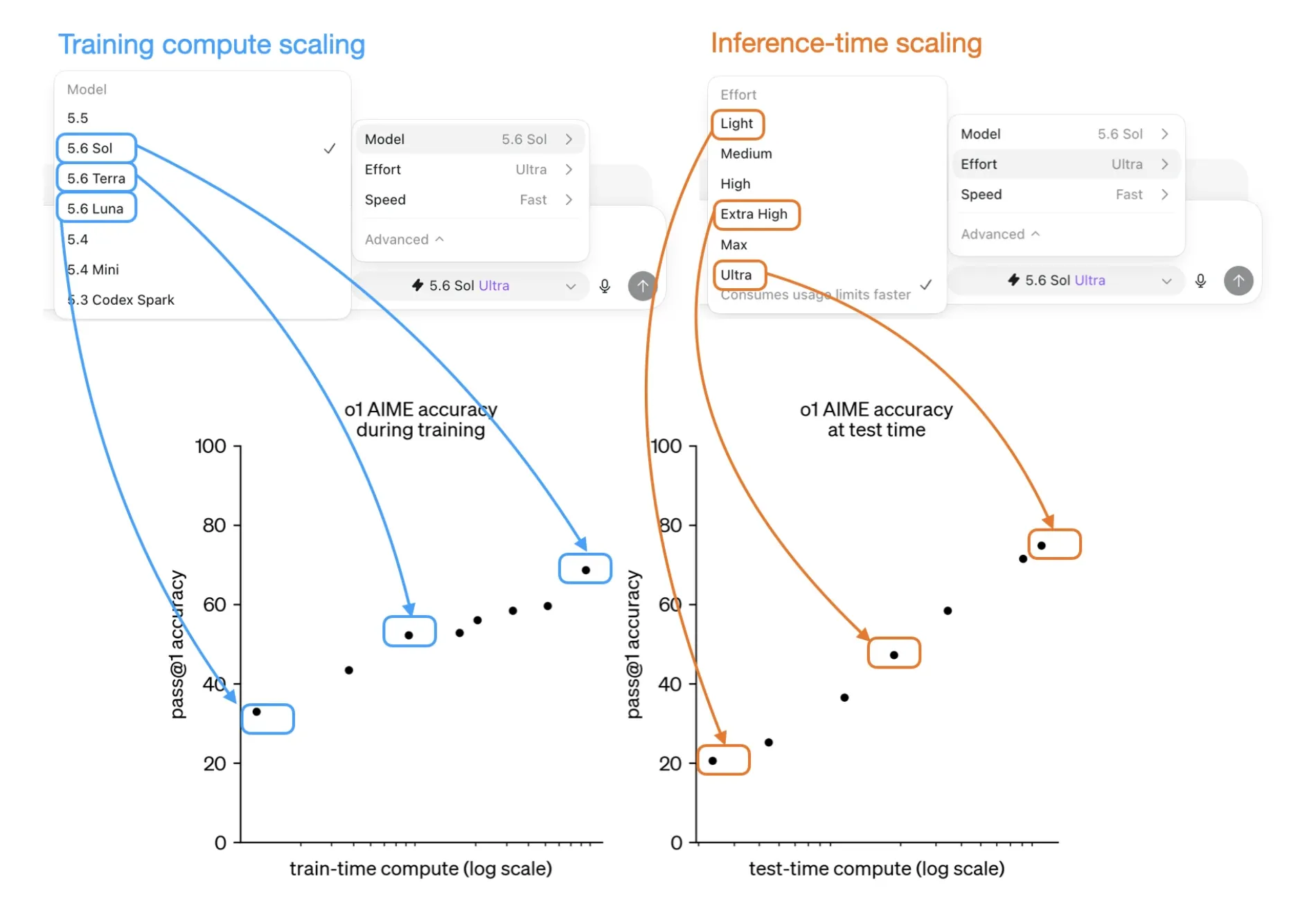
Figure: Model size changes training-time compute, while effort settings change test-time compute. Source: Sebastian Raschka.
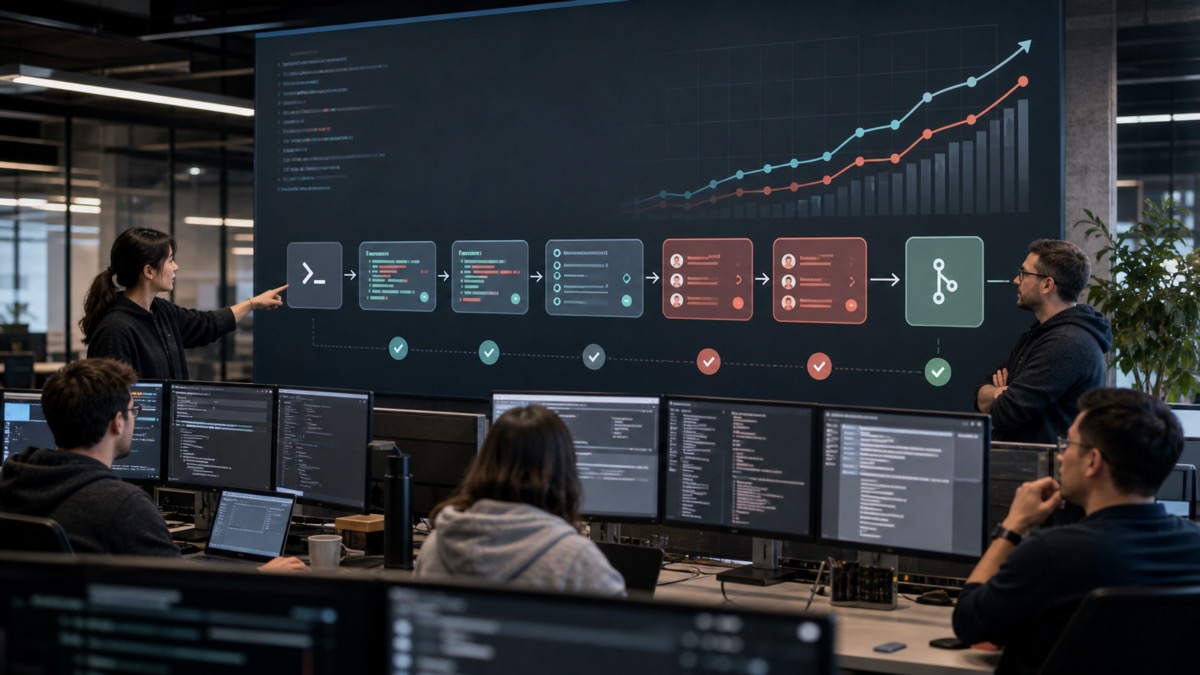
Parallelism is not free intelligence. It works best when a task can be decomposed into independent workstreams such as research, implementation, testing, and review. It can waste tokens when agents duplicate the same search, operate on conflicting state, or require expensive synthesis.
Use ultra only when:
- The expected value of a successful result is high.
- The task has separable subproblems.
- The system can trace each subagent’s work.
- A cheaper single-agent baseline has already been measured.
- The final output can be verified.
A production routing policy
A simple starting policy is more useful than a universal favorite:
- Send deterministic and low-risk work to Luna at low or medium effort.
- Use Luna at high effort for coding and analysis that benefits from additional checking.
- Escalate to Terra when a measured class of tasks falls below its success threshold.
- Use Sol for high-value, long-horizon, or repeatedly failed cases.
- Use multi-agent execution only for tasks that show a verified gain from decomposition.
Store the decision, model version, effort level, token use, latency, tool calls, and outcome for every run. Without that record, routing becomes guesswork.
Benchmark the workflow, not the answer
For agent systems, a polished final response can hide a bad process. A useful evaluation should check:
- Whether the requested change actually works.
- Whether unrelated files or data were modified.
- Whether sources support the claims.
- How many retries and tool calls were required.
- How much reviewer time was needed.
- Whether the result remains correct after a model update.
The best model is the one that produces the lowest cost per accepted outcome within the required safety and latency boundaries.
The signal
GPT-5.6 makes frontier capability more configurable. That is good news for teams with disciplined evaluations and bad news for teams that treat model selection as a dropdown preference.
Start with Luna, escalate with evidence, and make Sol prove its additional cost on your own workload.